
Union County Oregon Dissolution Records
Union County stores divorce records at the Circuit Court in La Grande. The county was formed on October 14, 1864, from Baker County. La Grande is the county seat and home to the only courthouse in Union County. All dissolution of marriage cases for Union County residents are filed and stored here. The court serves the Grande Ronde Valley and surrounding areas of northeastern Oregon.
Union County Quick Facts
Union County Circuit Court Records
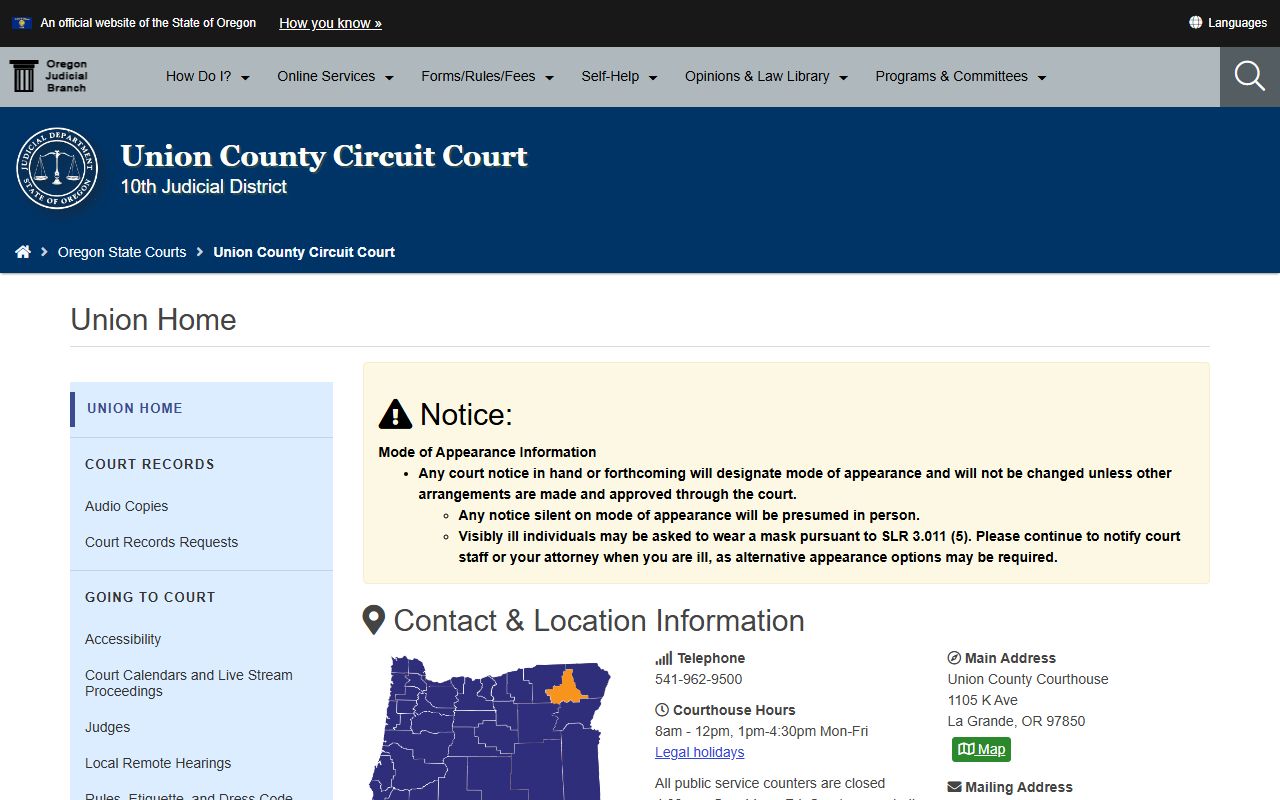
Trial Court Administrator Meegan Anderson runs the Union County Circuit Court. The courthouse is at 1001 4th Street, Suite 2, in La Grande. Hours are 8 AM to 5 PM on weekdays. You can reach the clerk at 541-963-1016. Mail goes to PO Box 327, La Grande, OR 97850. The fax number is 541-963-3065.
The Union County Circuit Court keeps all divorce records for the county. This includes petitions, responses, motions, and final judgments. Staff can pull case files and make copies for you. The court also handles custody, support, and property matters tied to divorce cases in Union County. Certified copies carry the court seal and are accepted for legal purposes.
| Court |
Union County Circuit Court 1001 4th Street, Suite 2 La Grande, OR 97850 PO Box 327 Phone: (541) 963-1016 Fax: (541) 963-3065 |
|---|---|
| Hours | Monday through Friday, 8:00 AM to 5:00 PM |
| Administrator | Meegan Anderson, Trial Court Administrator |
Search Union County Divorce Records Online
Oregon eCourt is the best way to look up recent divorce cases in Union County without visiting the courthouse. The system is called OJCIN. You can find it at courts.oregon.gov. It lets you search by name or case number. A small fee applies for full case details.
For older divorce records in Union County, an in-person visit may be needed. The clerk can search files that are not yet in the electronic system. Bring the full name of one spouse and an approximate year. The clerk will look through the index and pull the file for you. You can view it and ask for copies at the Union County courthouse in La Grande.
Historical Divorce Records in Union County
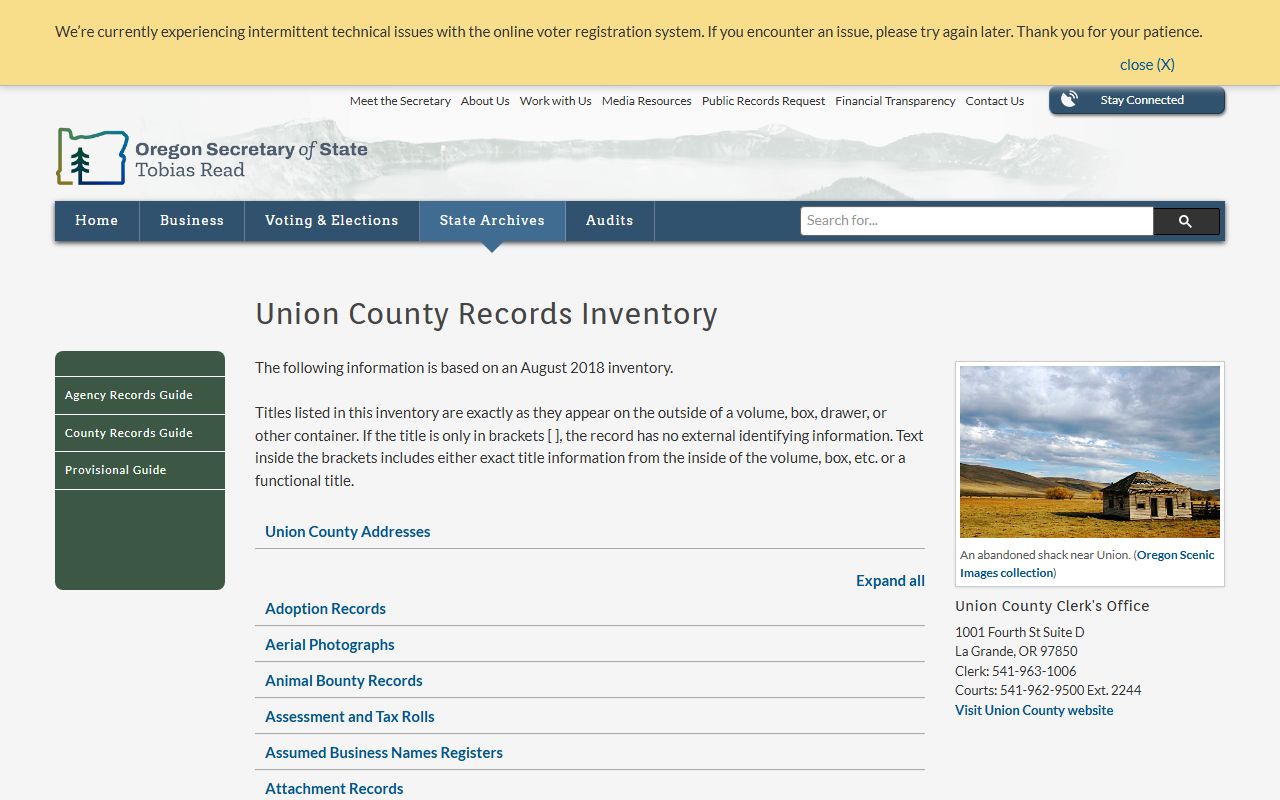
Union County has kept court records since 1864. The Oregon State Archives lists what historical records survive from Union County. Early divorce files may be stored at the state archives in Salem or at the courthouse in La Grande. These old case files contain petitions, summons, and court orders from the 1800s and early 1900s.
Genealogy researchers often seek these early records. The documents show names, ages, marriage dates, and reasons cited in the petition. Under ORS 192.311 to 192.478, historical court records in Union County are public. Anyone can request access to view or copy them. Some records may be fragile, so the archives may limit handling.
Note: Baker County was the parent county of Union County, so very early records from 1864 may exist in Baker County files.
Filing for Divorce in Union County
To start a divorce in Union County, you file a petition at the clerk window in La Grande. Oregon law requires at least one spouse to have lived in the state for six months. ORS 107.075 sets this residency rule. If the marriage happened in Oregon and one spouse still lives here, the waiting period does not apply.
ORS 107.025 states that irreconcilable differences is the only ground for divorce in Oregon. You do not have to prove fault. After you file, you must serve your spouse. Then a 90-day waiting period begins. During this time, the parties can negotiate terms. The court in Union County enters a general judgment once everything is resolved.
The judgment covers property, debts, support, custody, and name restoration. ORS 107.105 lists what the court can include in the final order. This judgment becomes a permanent divorce record in Union County. You can get certified copies from the clerk.
Union County Divorce Certificates
A divorce certificate is a state-issued document. It is separate from the court judgment. The Oregon Health Authority issues these certificates through the Center for Health Statistics. Records go back to 1925. The fee is $25 per copy.
Order online through VitalChek or by mail to PO Box 14050, Portland, OR 97293-0050. A certificate shows names, date, and county of the divorce. It does not show property or custody terms. For the full judgment from a Union County divorce, contact the Circuit Court clerk in La Grande.
What Union County Divorce Records Show
A divorce file in Union County contains several documents. The petition starts the case. ORS 107.065 requires the petition to list grounds, names, and what the petitioner asks for. The response comes from the other spouse under ORS 107.115.
Other documents in a Union County divorce file may include:
- Summons and proof of service
- Financial declarations
- Parenting plans for custody
- Settlement agreements
- The general judgment of dissolution
Most of these records are public in Union County. Some financial details or information about children may be sealed. The judgment is the most requested document because it is the official proof that the marriage ended. Under ORS 432.350, the clerk also reports each dissolution to the state for vital records purposes.
Legal Help for Union County Residents
Self-represented parties can find divorce forms at courts.oregon.gov. The forms include instructions. They cover petitions, responses, and judgments for use in Union County and all Oregon courts.
The Oregon State Bar lawyer referral line is 503-684-3763. They can connect you with a family law attorney near La Grande. Legal Aid Services of Oregon may help low-income residents with divorce matters in Union County. Call to check if you qualify for free help.
Note: The courthouse in La Grande does not provide legal advice, but staff can help you understand what forms to file in Union County.
Nearby Counties
Union County borders several other Oregon counties. Make sure you file in the county where you reside for proper jurisdiction.